

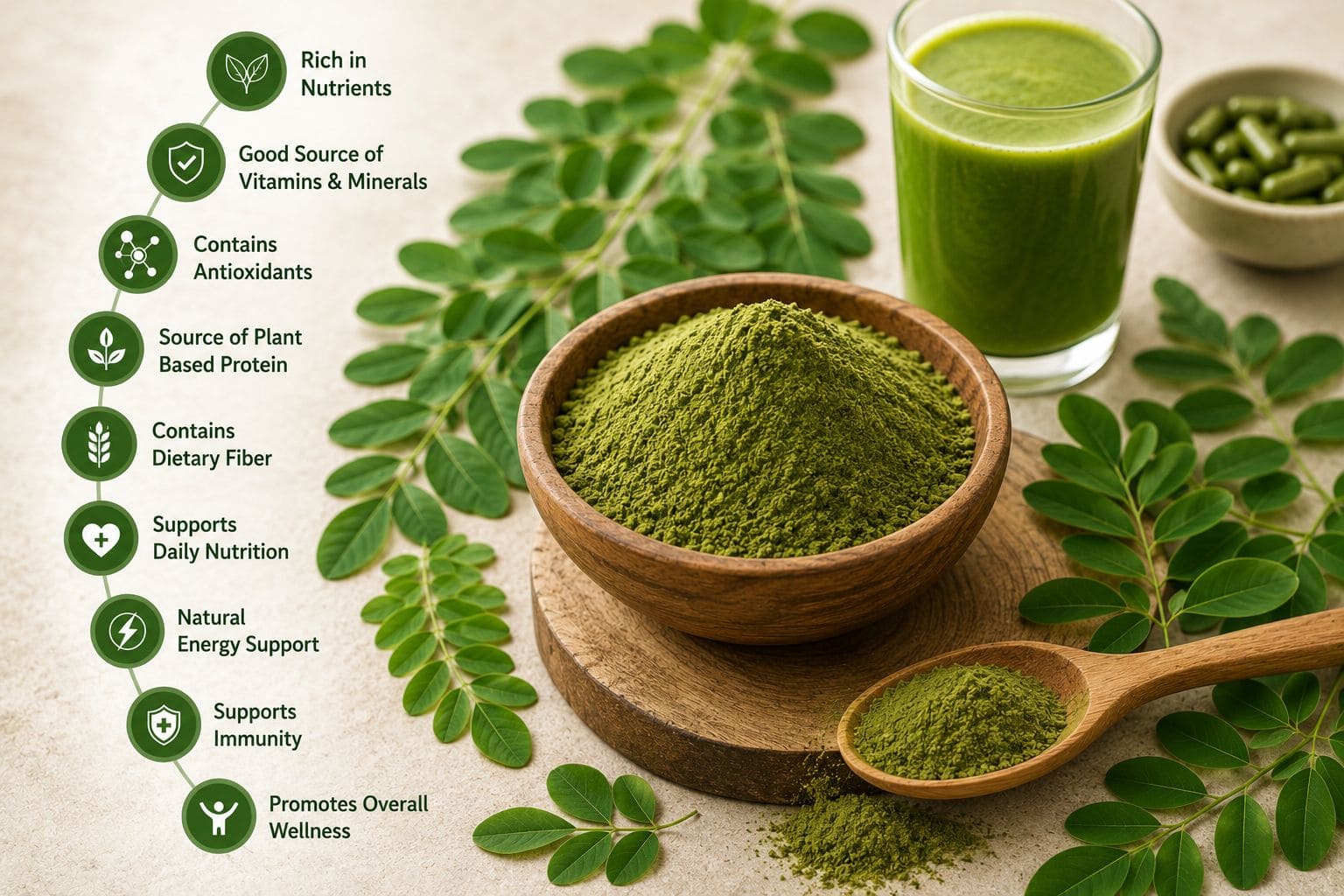
Moringa powder is made from the leaves of Moringa (Moringa oleifera), a plant widely valued for its naturally occurring nutrients and plant compounds. The leaves contain a variety of vitamins, minerals, protein, dietary fiber, antioxidants, and other naturally occurring compounds.
While moringa should not be considered a substitute for a balanced diet or medical treatment, its nutritional profile makes it a versatile plant-based ingredient for everyday use.
1. Source of Plant-Based Protein
Moringa leaves naturally contain plant-based protein, making moringa powder a convenient ingredient to include in a varied diet.
2. Contains Dietary Fiber
Moringa leaf powder naturally contains dietary fiber, which contributes to its overall nutritional profile.
3. Naturally Contains Calcium
Moringa leaves are naturally a source of calcium, an essential mineral that plays an important role in maintaining normal body functions.
4. Source of Iron
Moringa powder naturally contains iron, an essential mineral involved in important functions within the body.
5. Contains Magnesium
Magnesium is one of the naturally occurring minerals found in moringa leaves and contributes to the plant’s diverse nutritional profile.
6. Contains Potassium
Moringa leaves naturally provide potassium, an essential mineral that forms part of a balanced nutritional intake.
7. Naturally Contains Vitamin A
Moringa leaves contain naturally occurring vitamin A and related plant compounds such as carotenoids.
8. Contains Vitamin C
Moringa leaves naturally contain vitamin C, although the amount can vary depending on growing, harvesting, and processing conditions.
9. Contains Vitamin E
Moringa leaves contain naturally occurring vitamin E and other plant compounds that contribute to their nutritional profile.
10. Naturally Occurring Antioxidants
Moringa leaves contain naturally occurring antioxidant compounds, including various polyphenols and other plant compounds.
11. Rich in Naturally Occurring Plant Nutrients
Moringa powder provides a combination of naturally occurring vitamins, minerals, protein, fiber, and other plant nutrients in one convenient ingredient.
12. Contains Essential Minerals
In addition to calcium, iron, magnesium, and potassium, moringa leaves contain other minerals that contribute to their overall nutritional composition.
13. Contains Carotenoids
Moringa leaves contain naturally occurring carotenoids, plant pigments that contribute to their characteristic green color and nutritional composition.
14. Contains Polyphenolic Compounds
Moringa leaves contain naturally occurring polyphenolic compounds that are part of the plant’s diverse chemical and nutritional profile.
15. Easy to Include in Everyday Meals
Beyond its nutritional composition, moringa powder is convenient to use. Its fine texture makes it easy to add to smoothies, juices, yogurt, oatmeal, soups, dressings, and other everyday foods.
Why Quality Matters
The nutritional composition of Moringa (Moringa oleifera) can vary depending on factors such as cultivation, soil conditions, harvesting, drying, processing, and storage. Choosing a product with clear sourcing and quality information can help you make a more informed choice.
Zenvyra Naturals Moringa Leaf Powder is sourced from Tamil Nadu, India, and processed into a 100-Mesh Fine Powder with moisture below 7%.
Conclusion
Moringa powder offers a diverse nutritional profile containing naturally occurring vitamins, minerals, protein, dietary fiber, antioxidants, and other plant compounds. It can be a convenient addition to a varied and balanced diet when used as part of an overall healthy lifestyle.